High-quality education and educational institutions—universities, technology institutes, liberal arts colleges—ranked among the best in the world make the United States a magnet for undergraduate education.
The fact that there are many more educational institutions to choose from compared to other countries also makes America stand out for our students. There are approximately 2,800 educational institutions in the US offering four-year degree programs.
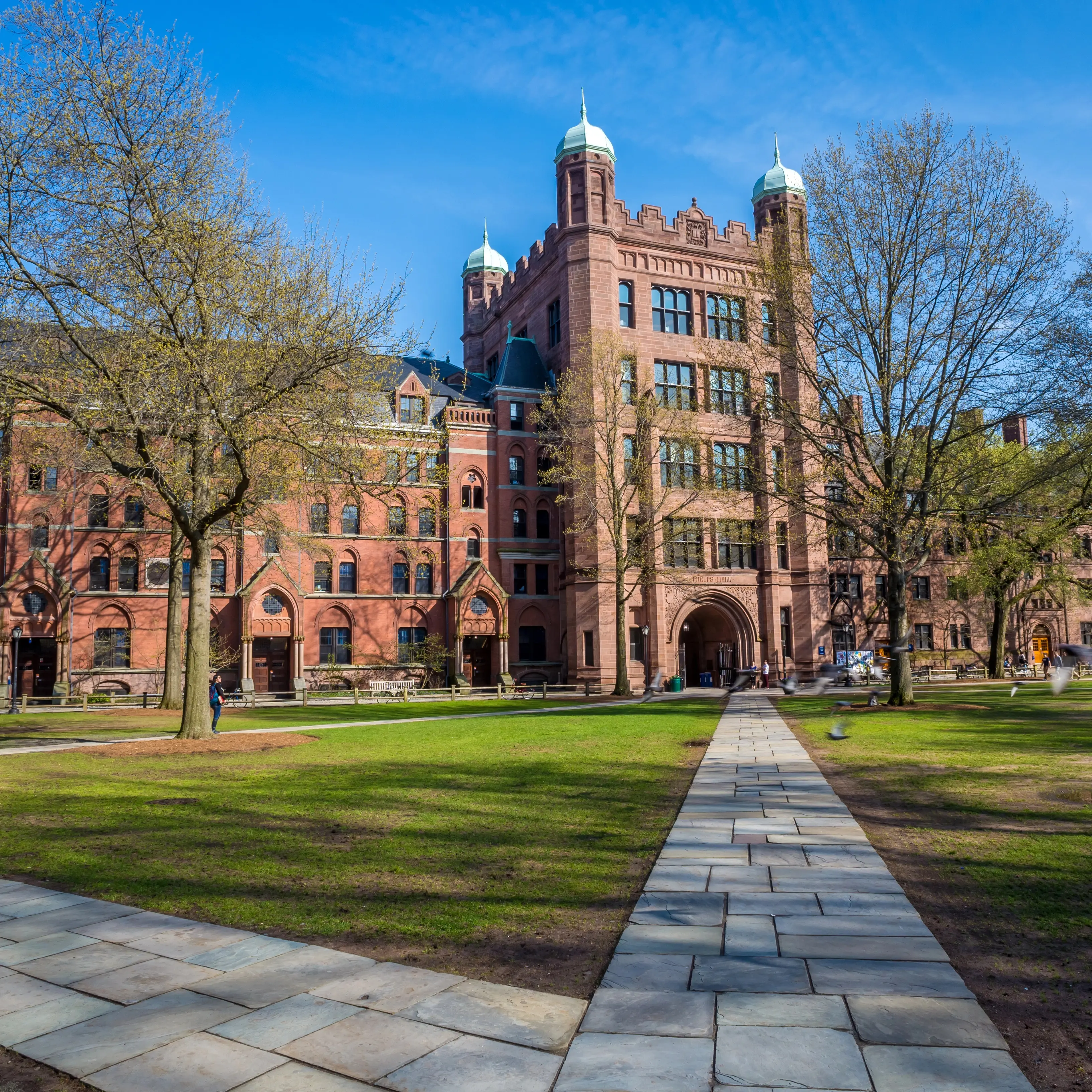
Campus environments that allow students to socialize are another advantage. Many US university campuses feature educational buildings surrounded by nature and numerous activity centers and sports complexes.
Strong faculties, scientific research opportunities, and an education system that prioritizes the individual development of students are among the key advantages of prestigious US universities.
When considering an educational journey in the US, distance from Turkey is considered a challenge for international students. Flight times from Istanbul to cities on the East Coast of the US are around 10 hours, while for schools on the West Coast, such as those in California, these times increase to around 14 hours.
High tuition fees for admissions without scholarships and grants can be considered another disadvantage. At public universities, the total cost, including tuition, meals, accommodation, and other fees, is around $40,000-65,000, while at private universities, this figure can reach $80,000-90,000.
The standard bachelor's degree program lasts four years. Most schools operate on a semester system, with fall and spring semesters. Although students have the option to take classes during the summer, they typically spend their summers in Turkey or doing internships.
As in our universities, program selection includes major, minor, and double major options. The option to declare a major later (Undeclared major) is also available for students who have not yet decided on their area of specialization.
The grading system is based on letter grades, and a grade point average (GPA) out of 4.00 is calculated using the numerical values assigned to these letters.
In pre-medical, pre-law, pre-dentistry, and other pre-professional programs, the undergraduate education is also 4 years. After undergraduate education, 4-year medical, law, and dentistry programs are taken.
The main components of US university applications are listed below.
Active participation in different projects, with leadership, outstanding achievement, dedication, and consistency in at least several of them, makes an application stronger.
Purpose is to demonstrate that the student has sufficient English language skills to pursue a university education in the United States.
Nearly all American universities accept IELTS and TOEFL scores for language proficiency. While the minimum scores required vary from school to school, in general, for IELTS it is 6-7 out of 9, and for TOEFL it is 86-100 out of 120.
Although the number of schools that accept Duolingo is increasing, the number of schools that do not accept it is still quite high.
Some schools do not require a language certificate if you have been a student at a school that provides English education for the last 4 years.
Purpose is to describe the student's experiences, the lessons learned from them, thoughts about the school being applied to, and, academic and professional goals.
Main essay (Common App. Essay)
Additional Essays (Writing Supplements/College Questions)
Essays must be original, creative, meaningful, and reflect the student's personality, be free of grammatical errors, and not be written by AI tools.
In reporting the GPA, the purpose is to demonstrate the student's academic achievement in high school. Applications to the US are made by reporting the average of student's 9th, 10th, and 11th grade point averages. 12th-grade performance can not affect admissions process because of the timing of the applications.
The student's ranking among all students in their grade level is important. Being in the top 5% and top 10% is advantageous.
U.S. schools allow GPA reporting on a 100-point scale for applications.
Applications are submitted through common portals or directly to the school. The most widely used portal is the Common Application portal.
For fall semester applications:
August 1 – Application period begins
Until November 1-15 – Early Applications (EA)
Until January 1–15 – Regular Decision (RD) Applications
Some schools accept applications throughout the year (Rolling Admissions).
Early Decision (ED), Restrictive Early Action (REA), and Early Decision II (EDII) are application types that restricts the students’ choices in case of acceptance.
Early Action (EA) application decisions are received during December-January period.
Regular Decision (RD) application decisions are received in March for most schools.
Rolling Admissions schools typically respond within 4-6 weeks after application, without waiting for a specific date.
Applications with binding components, such as ED, REA, and EDII, are finalized some time before the general announcement dates.
Schools may review a group of students' early decision (EA) applications and defer their decisions to the regular decision (RD) period. This is called deferral.
Schools can create a waitlist of students and call students from this list to fill vacancies left by students who were accepted but did not enroll (by May).
The acceptance rate from the waitlist varies from school to school but is approximately below 3-4%.
There are basically two types of scholarships:
Very few schools offer need-based financial aid to international students based on family income. Some of these schools are Ivy League schools (Harvard, UPenn, Princeton, Yale, Columbia, Cornell, Dartmouth, Brown), some are non-Ivy liberal arts colleges (Pomona, Amherst, Bates, etc.), and some are universities (Rice, Colgate, Emory, Tufts, etc.).
Merit-based scholarships are typically awarded based on SAT/ACT scores and grade point average.
For applications requesting need-based scholarships, some schools require a CSS Profile application submitted through the College Board portal.
In this application, the student answers questions about their family's income and assets for the application year and the previous tax year. Schools consider this financial information when making their admission decisions.
Students who are U.S. citizens must apply for U.S. Federal Government grants and loans.
There is no requirement for the student's family to reside in the U.S. or pay taxes in order to apply for federal aid, known as FAFSA.
When colleges see that a U.S. citizen student has applied for FAFSA and their income level is eligible for receiving federal need-based grants, they also provide need based grants from their own resources when making admissions decisions.
Accommodation at American universities is provided in university dormitories, and first-year (freshman) students are mostly required to live on campus.
Dormitory fees are paid directly to the school through the student's account.
Meal fees are also reflected in the account by the university in the form of a ‘meal plan’.
Students who study in the United States for 1 or 2 years (2 or 4 semesters) can apply for a transfer to other schools.
The transfer application period is usually open until March-April, 1-2 months after the first-year application period.
Application portals vary from school to school.
A strong transfer application requires a high grade point average and strong transfer essays.
AcceptEd Consultancy provides application support that includes academic advising, college list preparation, CV enhancement, essay support, standardized exam scheduling and tracking, school selection after decisions, F1 student visa procedures, and other placement support procedures.
For high-achieving students with a strong CV, no later than the end of 11th grade; for other students, 10th or no later than the beginning of 11th grade would be advisable to reach out for our help.
An academic consultancy firm guiding students through their international undergraduate and postgraduate admissions
Levent Mah. Cömert Sok. No:1 Yapı Kredi Plaza C Blok Kat:17 D.40 Ofis No:33 34330 Beşiktaş ISTANBUL
info@accepted.com.tr
Copyright © AcceptEd Consultancy. All Rights Reserved.